
Visualization Catalogue
Explore the chart types, maps, and network visualizations you can build with SCImago Graphica — from bar charts and scatter plots to choropleth maps and force-directed networks.
Comparisons
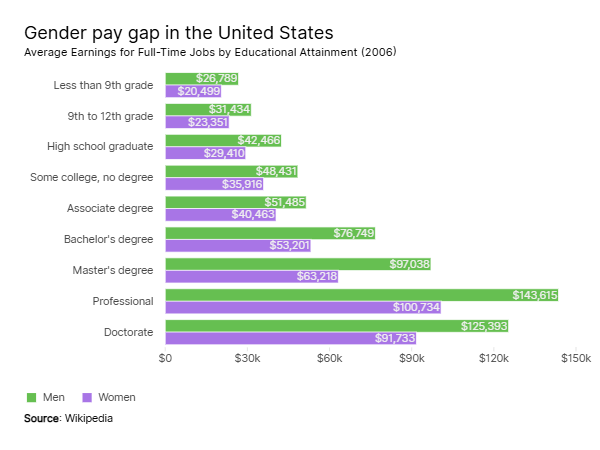
Bar chart The bar chart displays the relationship between a quantitative and a categorical variable. 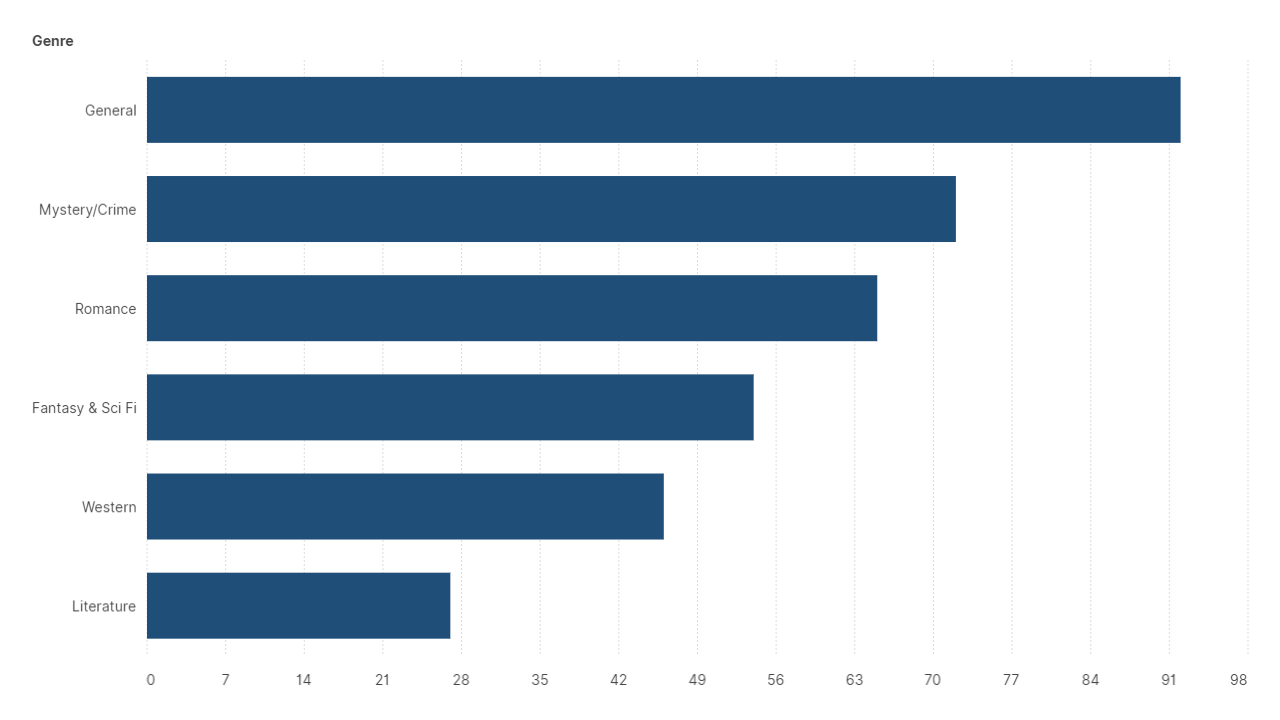 Clustered bar chart A clustered bar chart is like a bar chart, but with the addition of a categorical grouping variable.
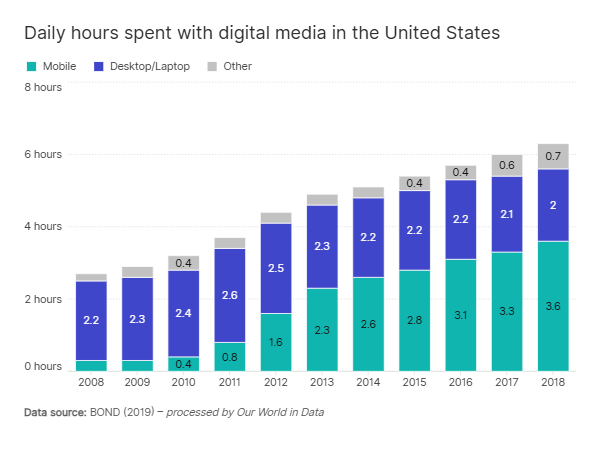
 Stacked bar chart A stacked bar chart is a form of bar chart in which for each bar there are different segments differentiated by color.
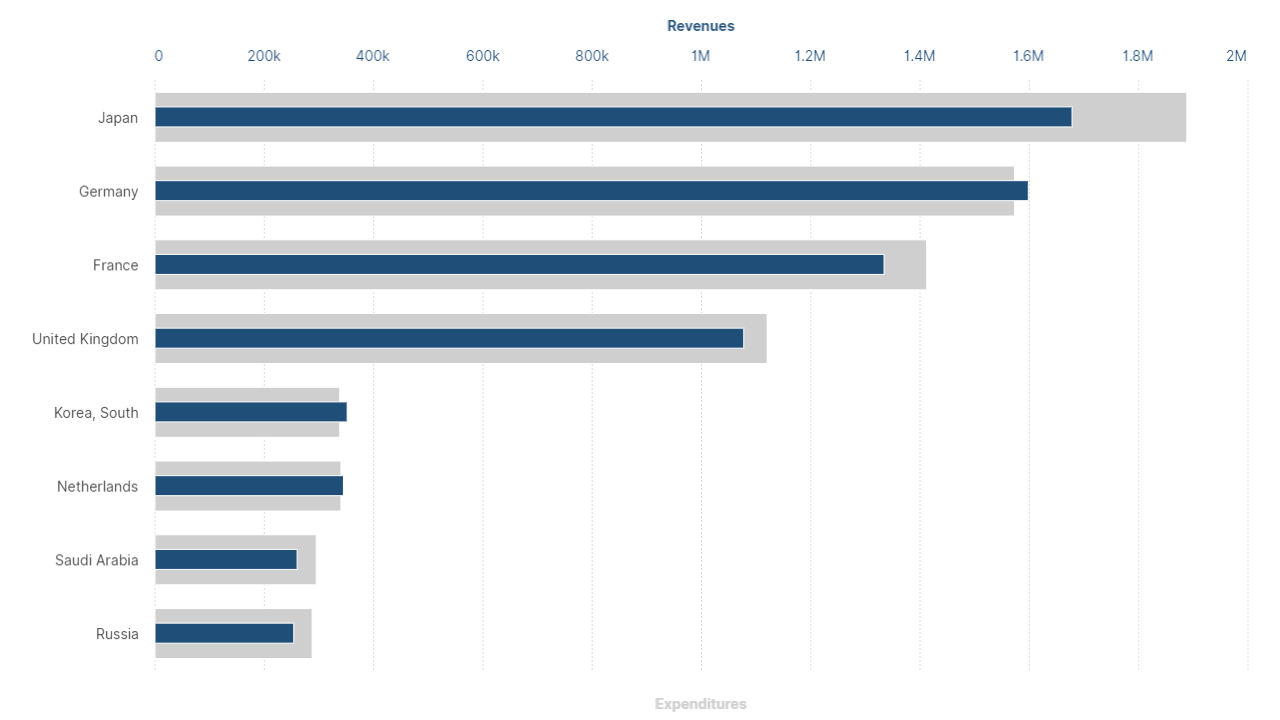
 Overlapping bars Overlapping bars allow comparison between two quantitative variables when both variables have comparable ranges of values.
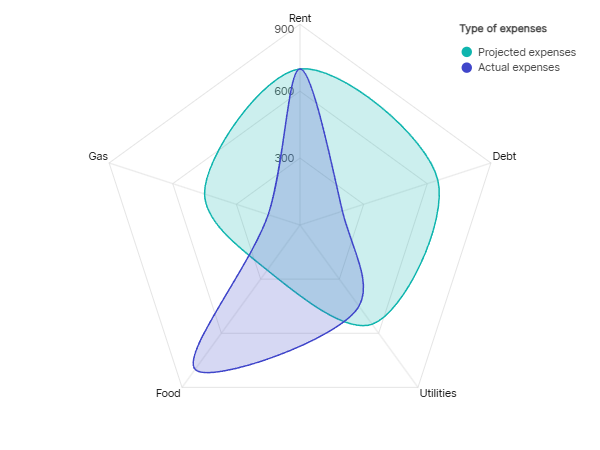
 Radar chart Radar plots are used to compare the degree to which two or more data series are similar or different from each other.
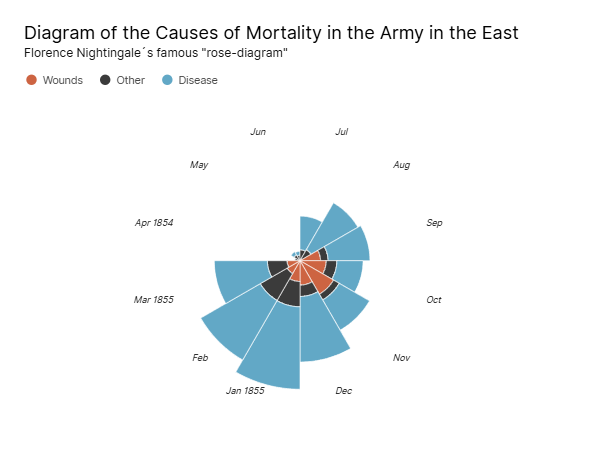
 Polar chart A polar chart is a circular chart in which all sectors have the same angle, but different size.
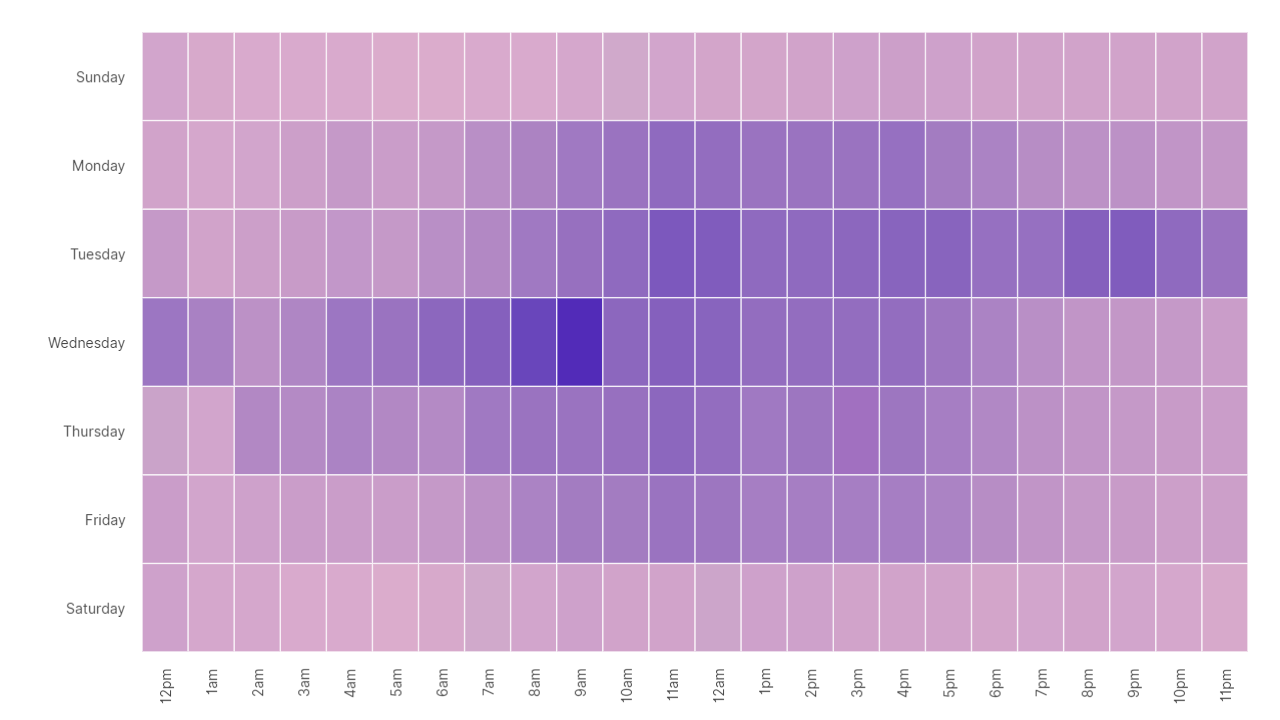
 Heat map A heat map is a representation of the relationship between two categorical variables and a quantitative variable.
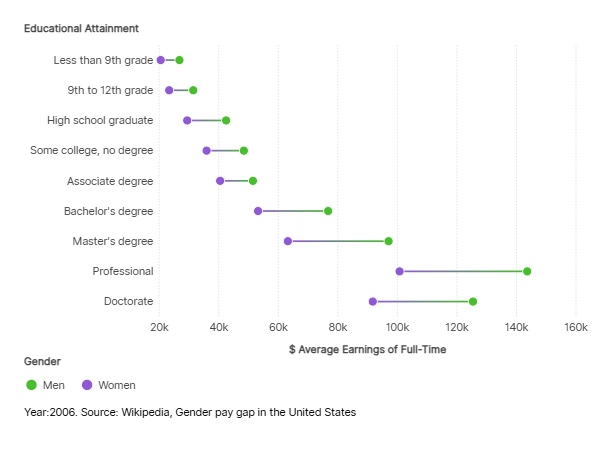
 Dumbbell chart Dumbbell charts emphasize the difference between quantitative values by connecting these values with lines.
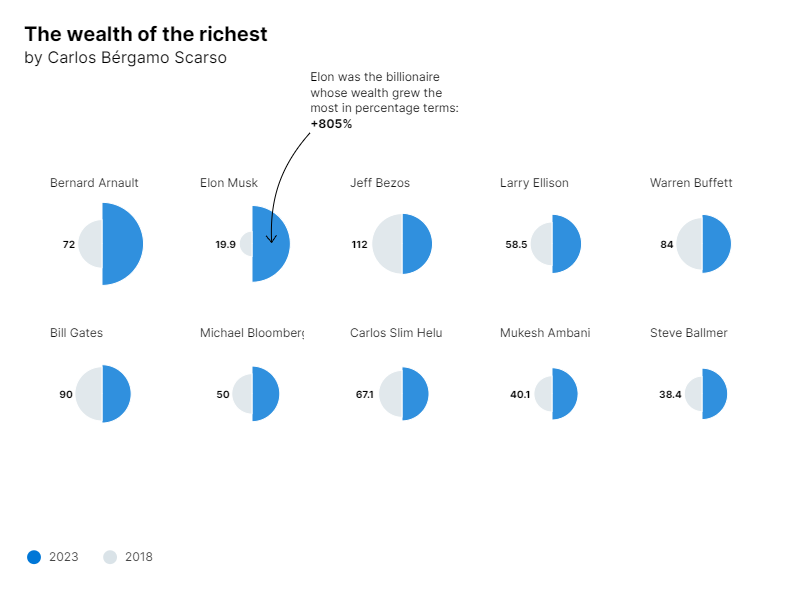
 Small multiples A small multiple is a type of data visualization in which a set of small charts using the same scale or axes are arranged in rows and columns to facilitate comparison between them.
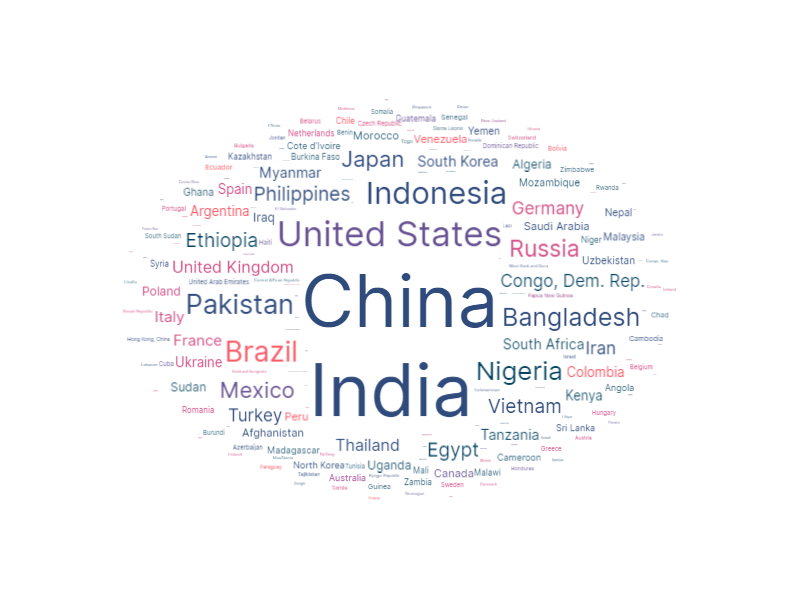
 Word cloud Word clouds are visualizations in which the size of the labels represents a quantitative variable.
Clustered bar chart A clustered bar chart is like a bar chart, but with the addition of a categorical grouping variable. Stacked bar chart A stacked bar chart is a form of bar chart in which for each bar there are different segments differentiated by color. Overlapping bars Overlapping bars allow comparison between two quantitative variables when both variables have comparable ranges of values. Radar chart Radar plots are used to compare the degree to which two or more data series are similar or different from each other. Polar chart A polar chart is a circular chart in which all sectors have the same angle, but different size. Heat map A heat map is a representation of the relationship between two categorical variables and a quantitative variable. Dumbbell chart Dumbbell charts emphasize the difference between quantitative values by connecting these values with lines. Small multiples A small multiple is a type of data visualization in which a set of small charts using the same scale or axes are arranged in rows and columns to facilitate comparison between them. Word cloud Word clouds are visualizations in which the size of the labels represents a quantitative variable. Distribution
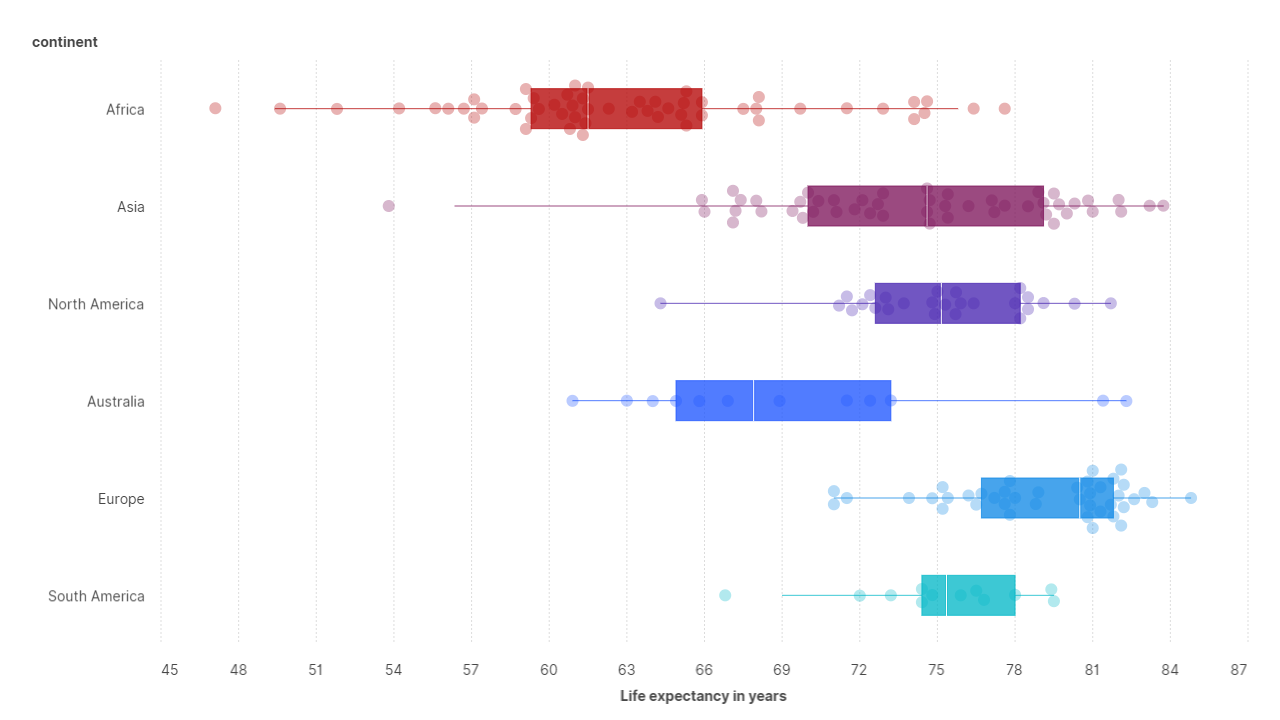
Histogram A histogram visualizes the distribution of a quantitative variable by representing the frequency of its values or groups of values by means of bars. 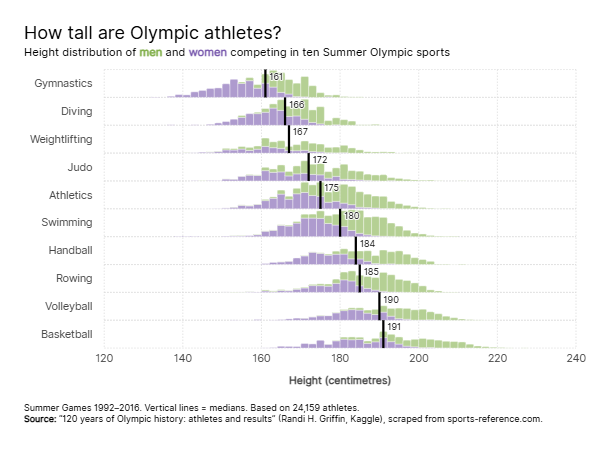 Box plot A boxplot provides a statistical summary of the data, representing the first quartile, the second quartile (or median) and the third quartile.
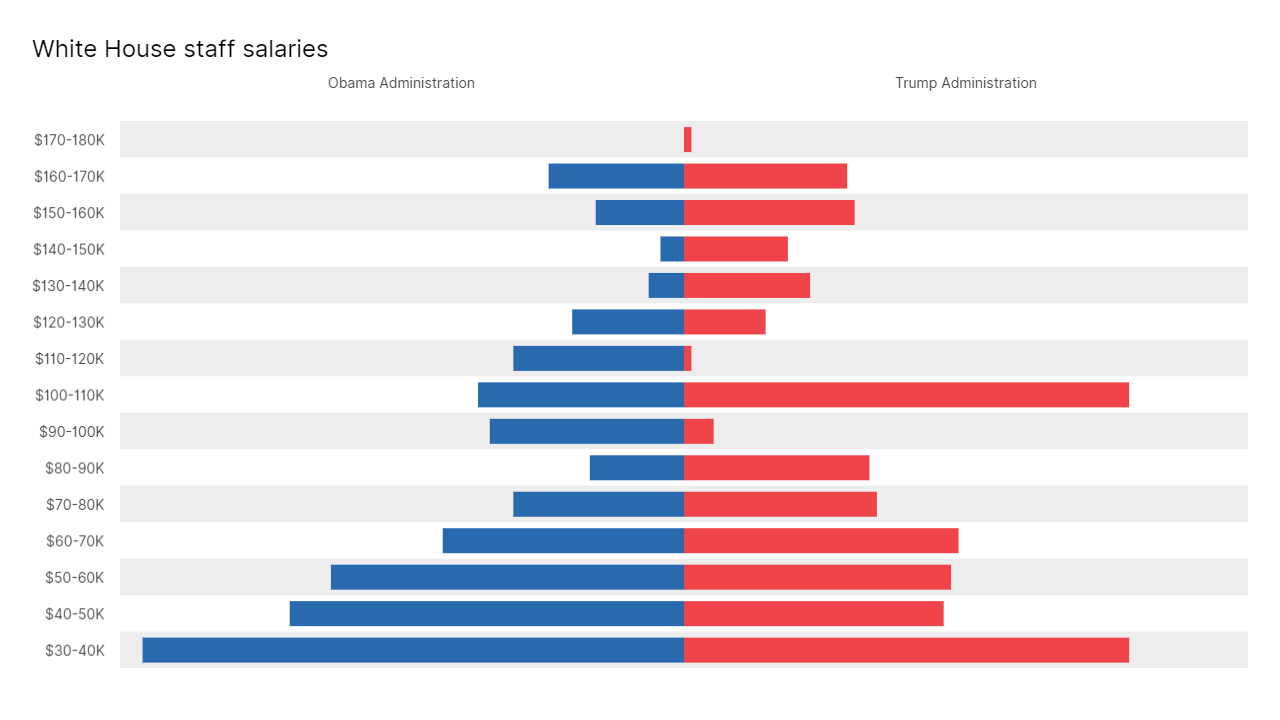
 Diverging bar chart A divergent bar chart allows you to compare how the quantitative values associated with two categories are distributed.
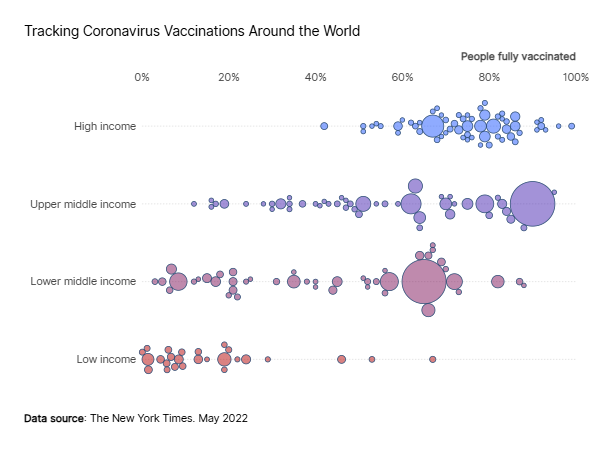
 Beeswarm plot A beeswarm plot is used to display the values of a quantitative variable along an axis.
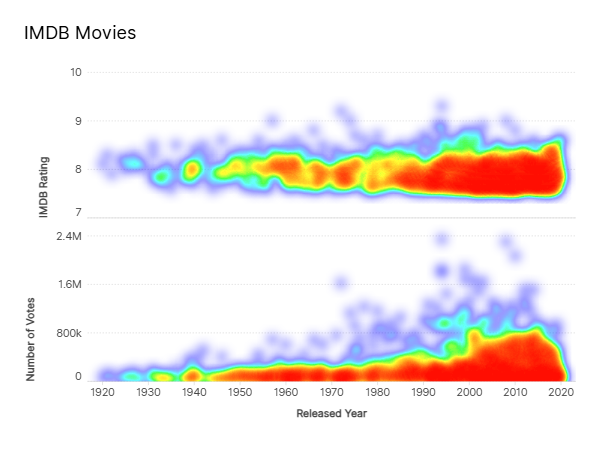
 Density heatmap Density heatmaps allow us to visualize dense data sets, in which there are many overlapping marks.
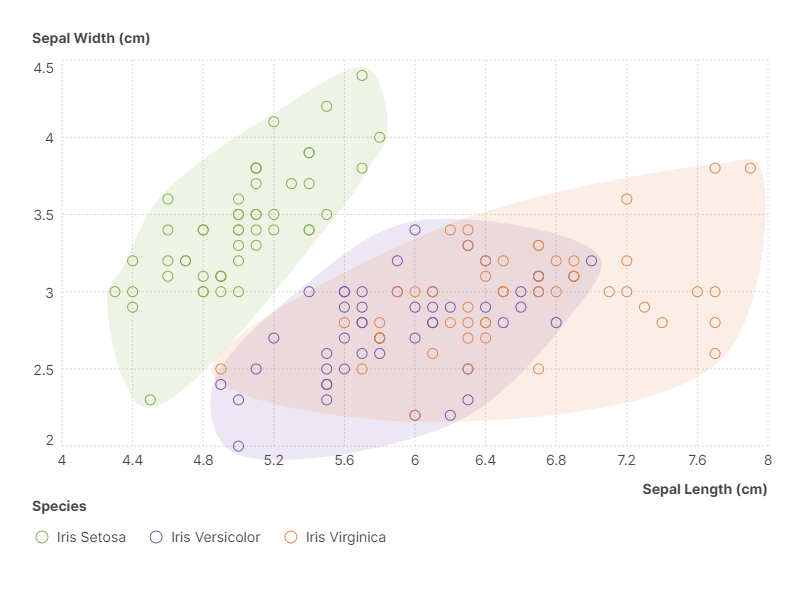
 Convex hull chart In geometry, the convex hull is the smallest (convex) shape enclosing a set of points.
Box plot A boxplot provides a statistical summary of the data, representing the first quartile, the second quartile (or median) and the third quartile. Diverging bar chart A divergent bar chart allows you to compare how the quantitative values associated with two categories are distributed. Beeswarm plot A beeswarm plot is used to display the values of a quantitative variable along an axis. Density heatmap Density heatmaps allow us to visualize dense data sets, in which there are many overlapping marks. Convex hull chart In geometry, the convex hull is the smallest (convex) shape enclosing a set of points. Correlation
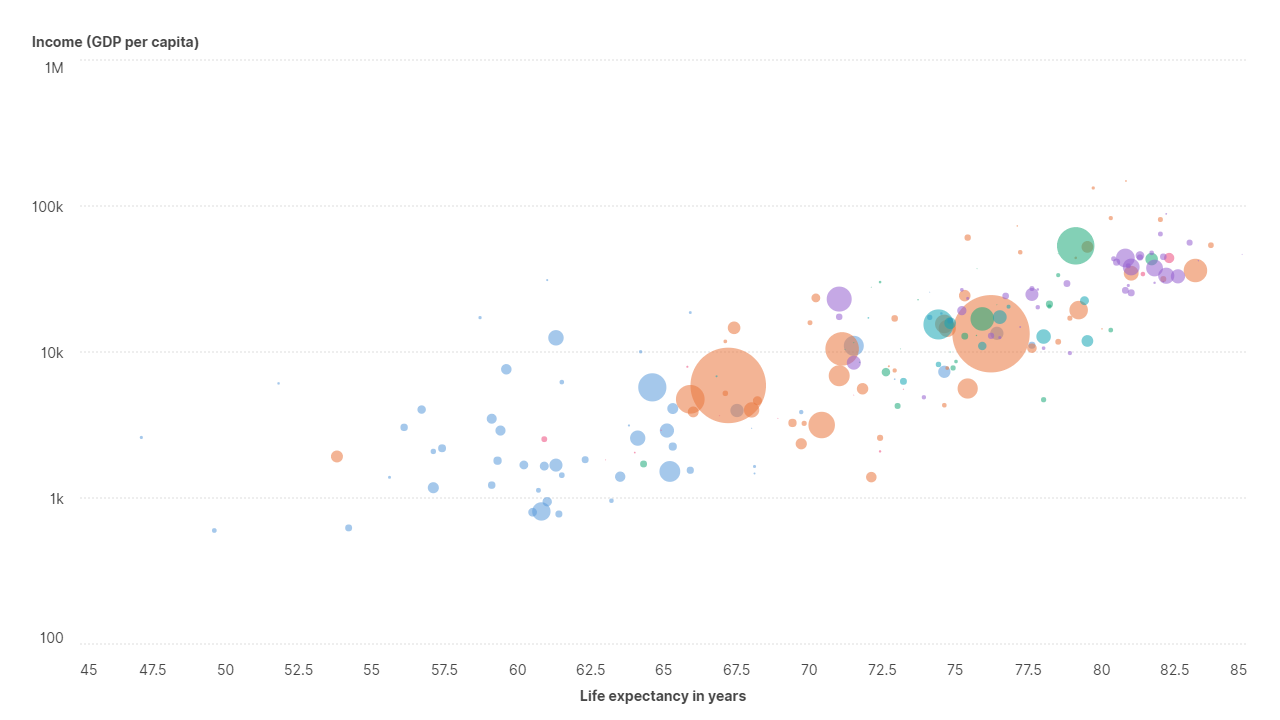
Scatter plot A scatter plot shows the relationship between two quantitative variables. 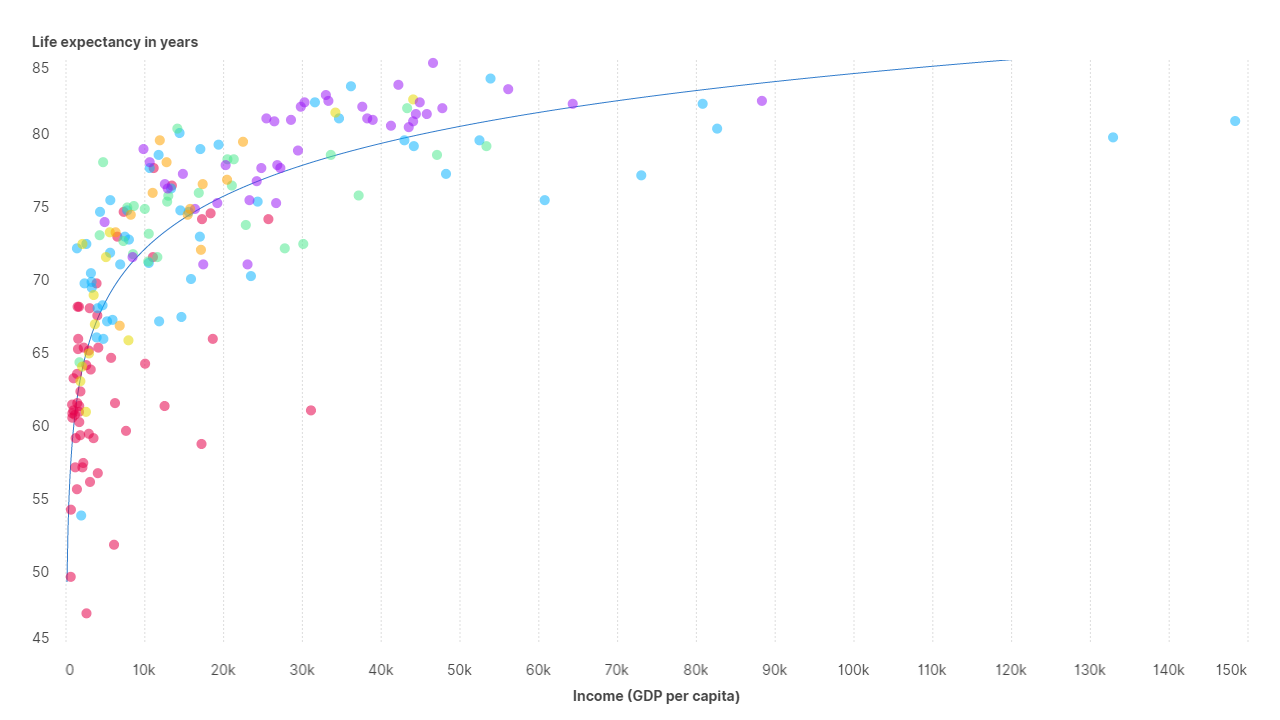 Bubble plot A bubble plot shows the relationship between three quantitative variables.
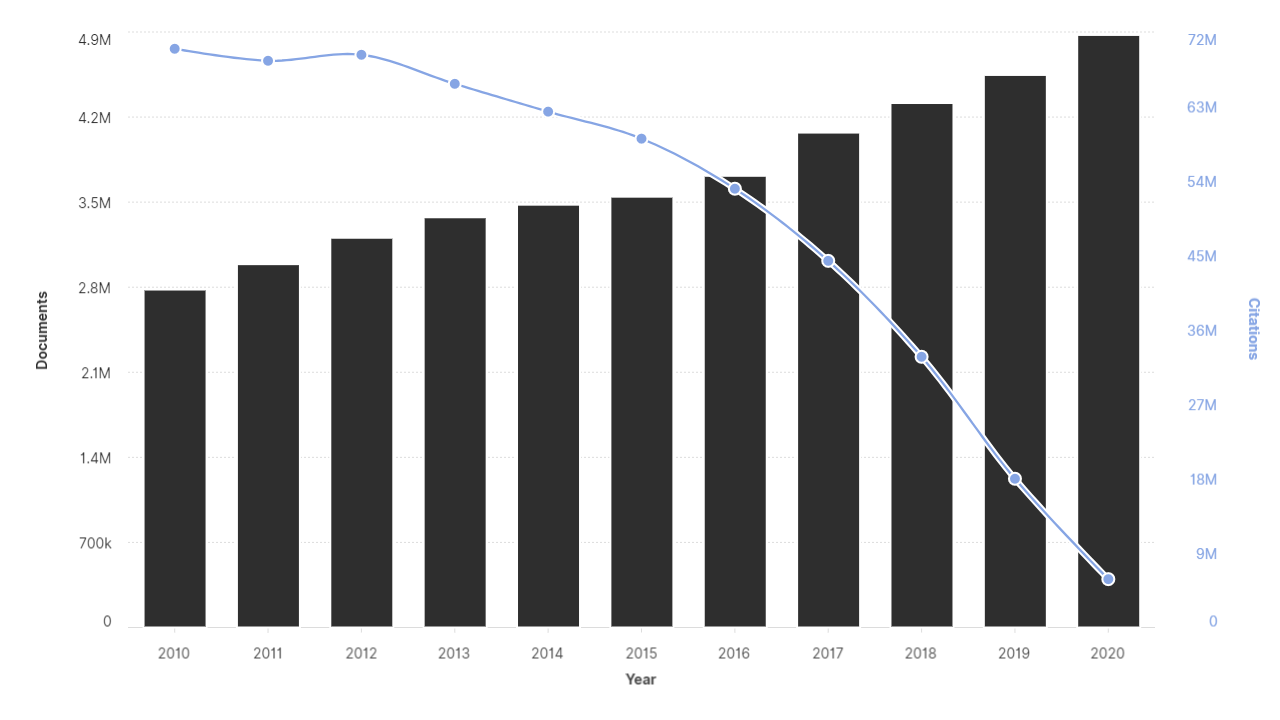
 Dual axis chart Dual-axis charts are used to show the relationship between two quantitative variables and a third categorical or date variable.
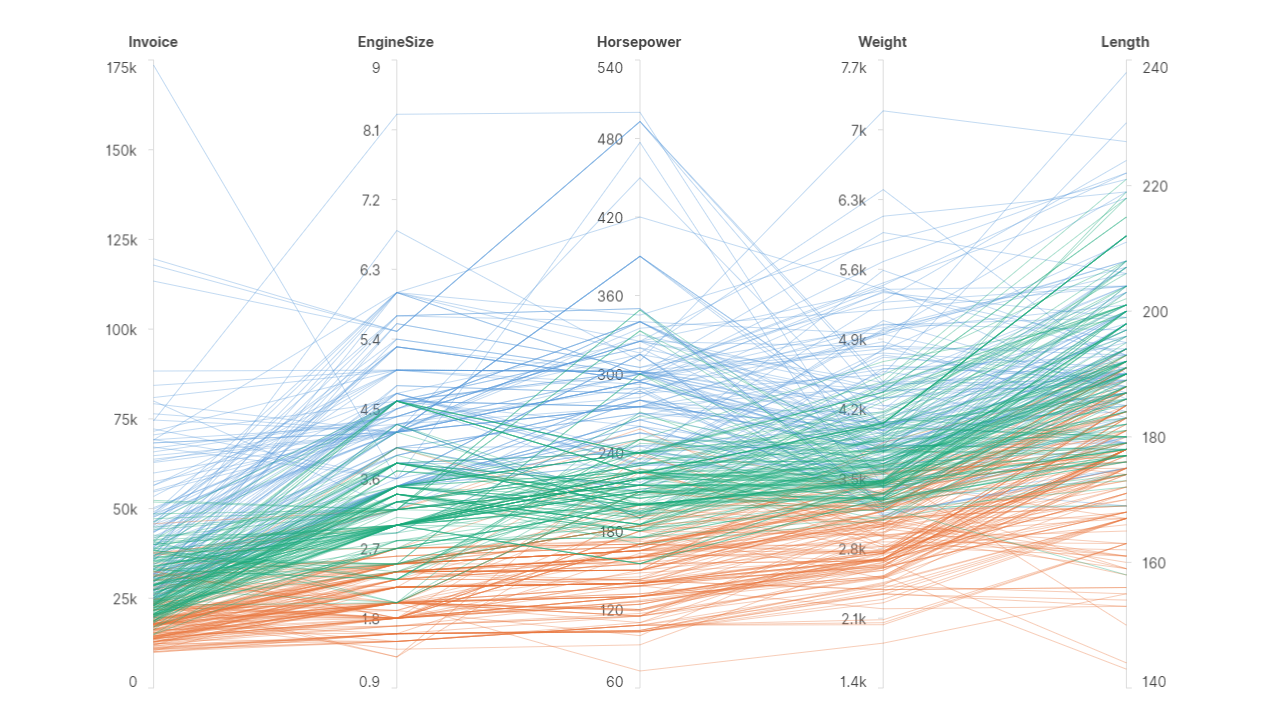
 Parallel coordinates Parallel coordinate plots allow to graphically represent the relationship between multiple quantitative variables, as well as to display a large volume of records or observations together.
Bubble plot A bubble plot shows the relationship between three quantitative variables. Dual axis chart Dual-axis charts are used to show the relationship between two quantitative variables and a third categorical or date variable. Parallel coordinates Parallel coordinate plots allow to graphically represent the relationship between multiple quantitative variables, as well as to display a large volume of records or observations together. Part of a whole
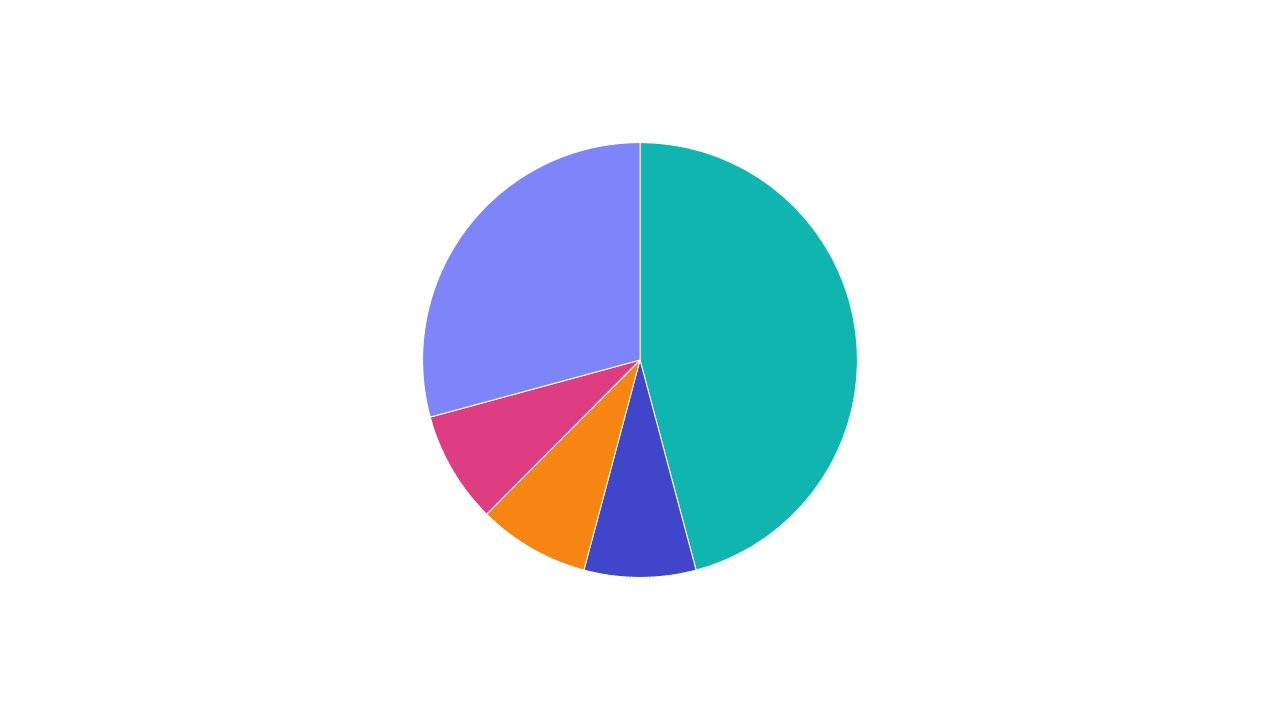
Treemap A treemap is a visualization in which the available visual space (usually rectangular) is subdivided into regions whose area represents a quantitative value. 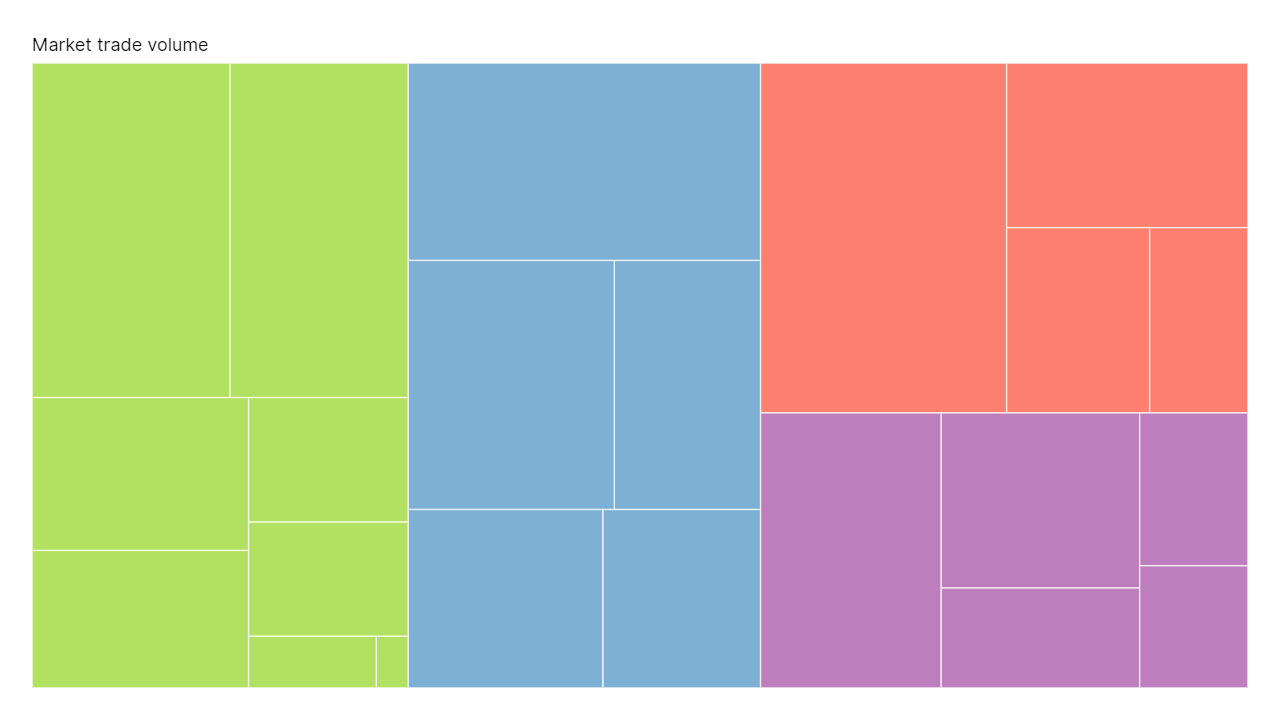 Pie chart A pie chart is a circular graphical representation divided into sectors, in which the size of each sector reflects the quantitative value of each category.
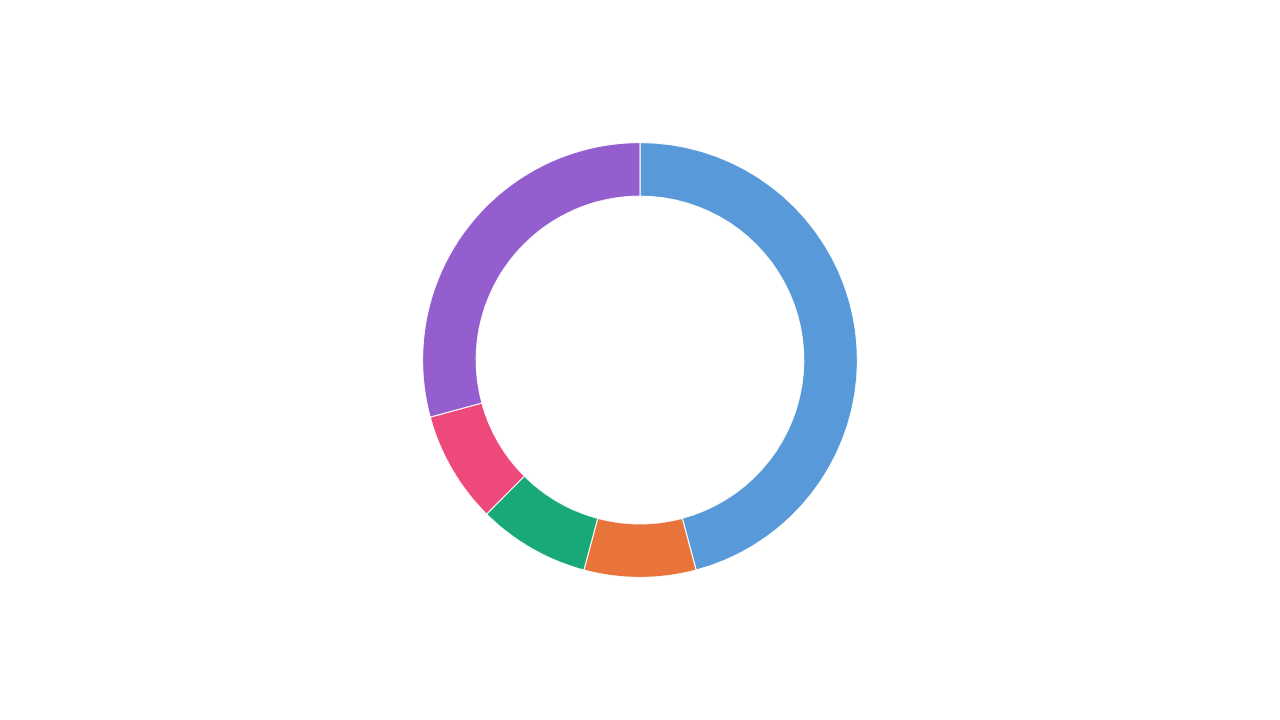
 Donut chart Donut charts are very similar to pie charts, except that they use a hollowed out circular shape.
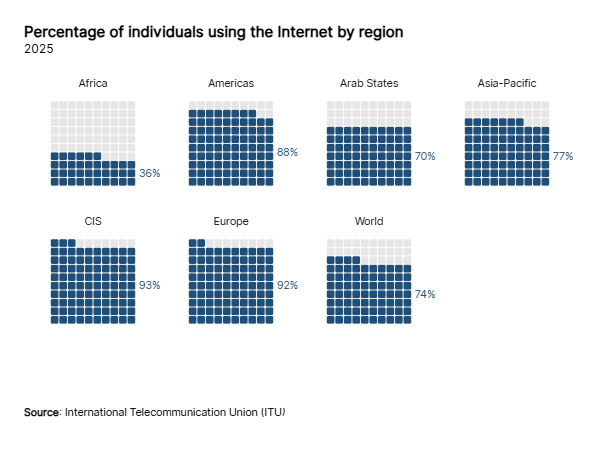
 Waffle chart A waffle chart (or square pie chart) is a grid of equal cells, usually 10 × 10, in which each category fills a number of cells proportional to its value.
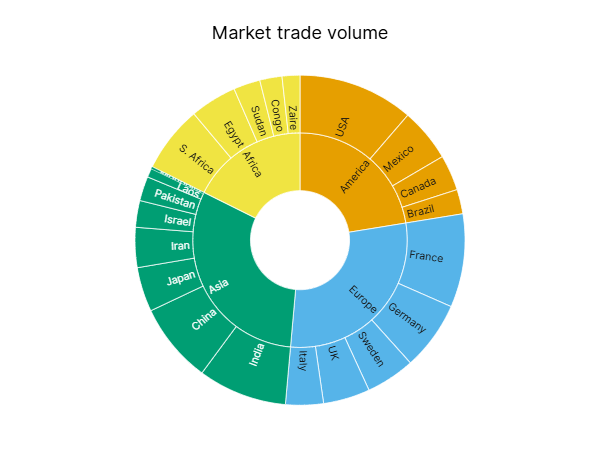
 Sunburst A sunburst diagram is an evolution of the pie chart, which allows to represent hierarchical relationships.
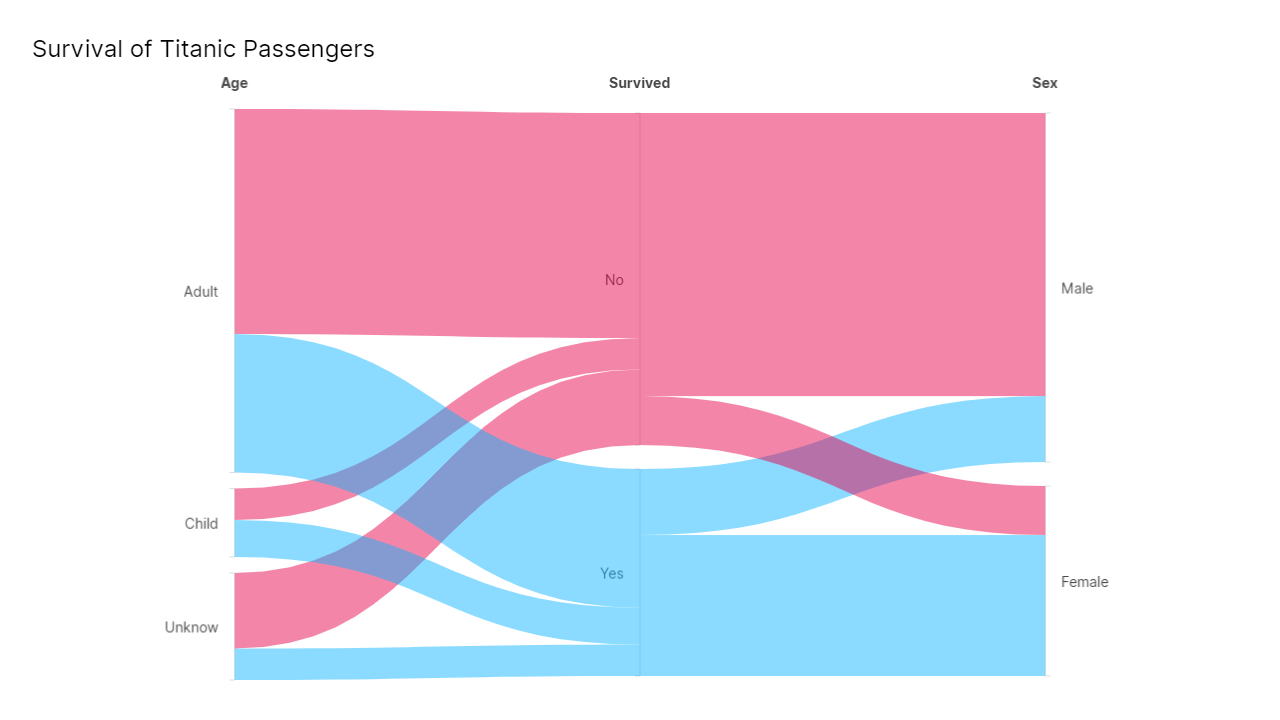
 Alluvial diagram Alluvial diagrams are similar to parallel coordinate plots , but the axis variables are categorical and connections are represented by areas instead of lines.
Pie chart A pie chart is a circular graphical representation divided into sectors, in which the size of each sector reflects the quantitative value of each category. Donut chart Donut charts are very similar to pie charts, except that they use a hollowed out circular shape. Waffle chart A waffle chart (or square pie chart) is a grid of equal cells, usually 10 × 10, in which each category fills a number of cells proportional to its value. Sunburst A sunburst diagram is an evolution of the pie chart, which allows to represent hierarchical relationships. Alluvial diagram Alluvial diagrams are similar to parallel coordinate plots , but the axis variables are categorical and connections are represented by areas instead of lines. Evolution
Line chart Line charts show the evolution (or distribution) of one or more data series by connecting the different points with lines. 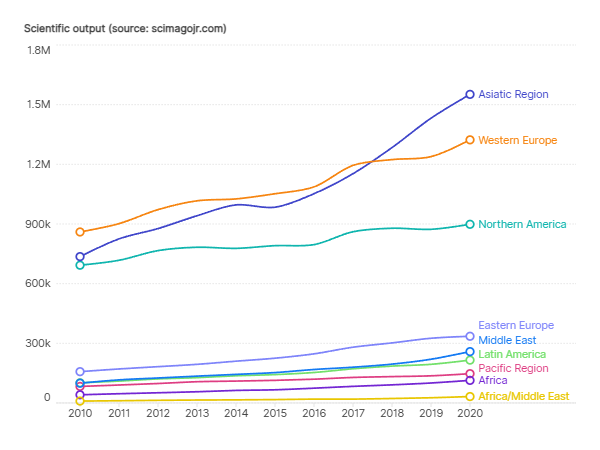 Area chart The area chart is very similar to the line chart, except that the space between the line and the categorical axis is filled with color.
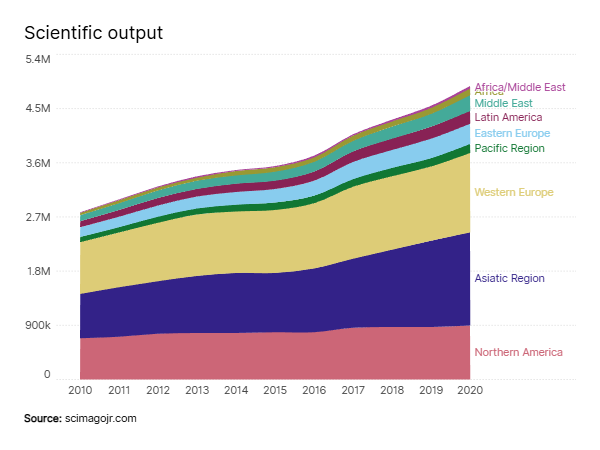 Stacked area chart A stacked area chart shows how several data series evolve over time by piling their areas on top of each other, so that the upper edge of the stack traces the total.
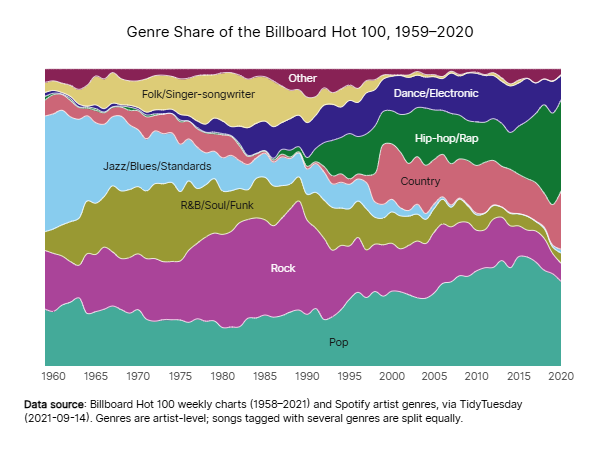 Stream graph Streamgraphs are very similar to area charts, except that the quantitative variable is not represented by a standard axis.
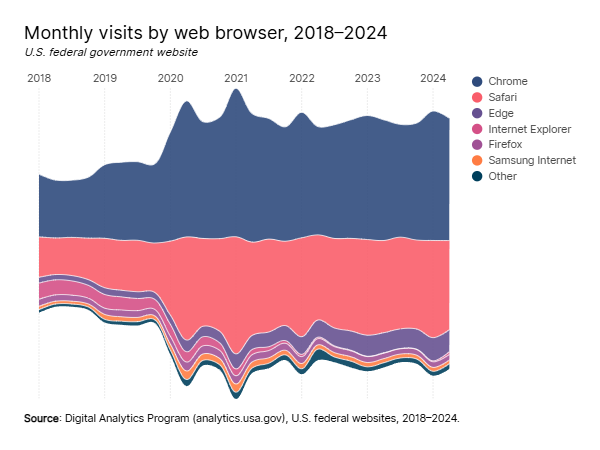 Connected scatter plot A connected scatter plot shows the relationship between two variables (X-axis and Y-axis), but in addition the points are connected by lines, following the order of an ordinal variable.
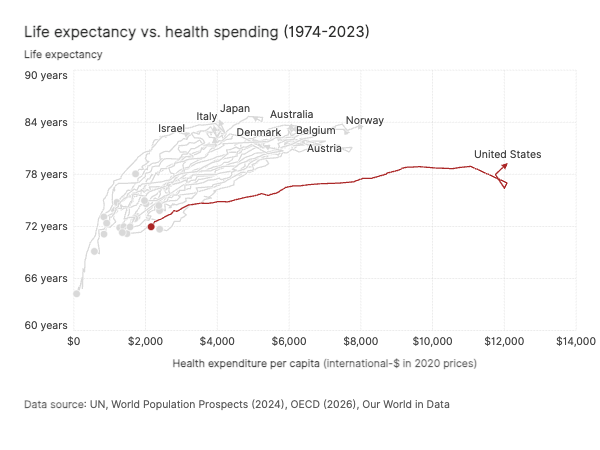 Slope chart Slope charts can be used to show the evolution or variation between two dates (simplified line chart ), or to show the relationship between two quantitative variables (simplified parallel coordinate plot ).
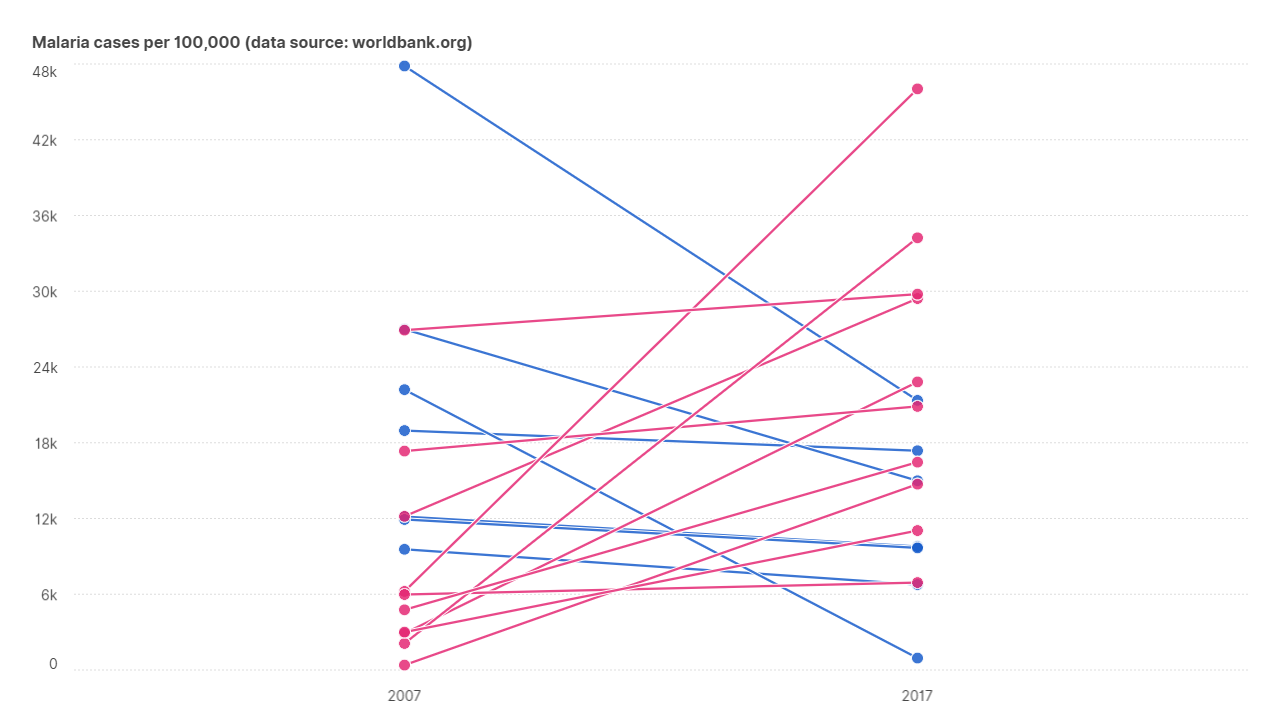
Area chart The area chart is very similar to the line chart, except that the space between the line and the categorical axis is filled with color. Stacked area chart A stacked area chart shows how several data series evolve over time by piling their areas on top of each other, so that the upper edge of the stack traces the total. Stream graph Streamgraphs are very similar to area charts, except that the quantitative variable is not represented by a standard axis. Connected scatter plot A connected scatter plot shows the relationship between two variables (X-axis and Y-axis), but in addition the points are connected by lines, following the order of an ordinal variable. Slope chart Slope charts can be used to show the evolution or variation between two dates (simplified line chart ), or to show the relationship between two quantitative variables (simplified parallel coordinate plot ). Map
Dot map A dot map displays the geographic distribution of a phenomena, where each observation is represented as a geopositioned point. 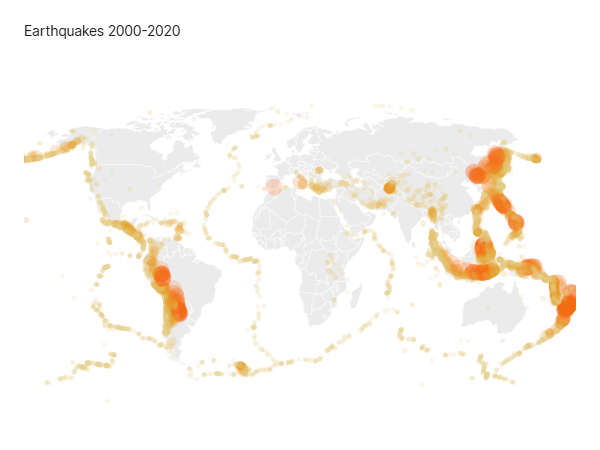 Choropleth map A choropleth map is one in which the color of the different regions encodes a quantitative variable.
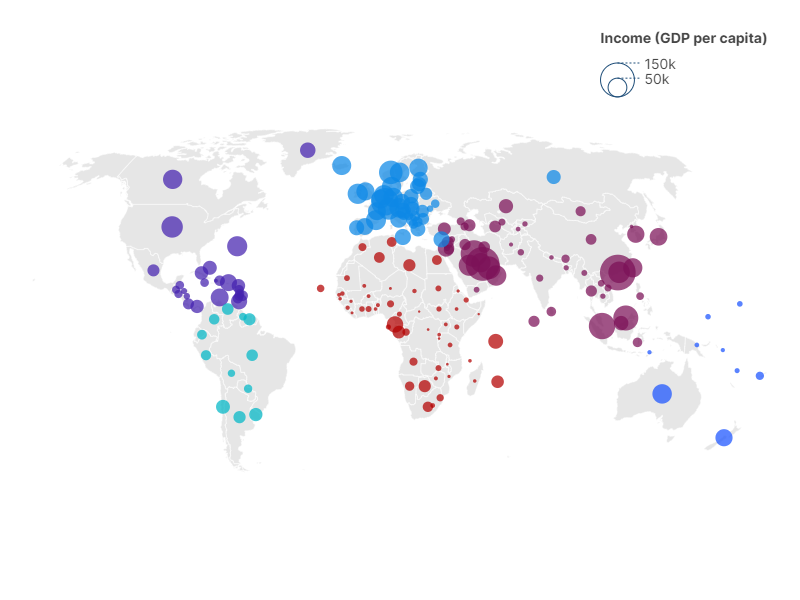
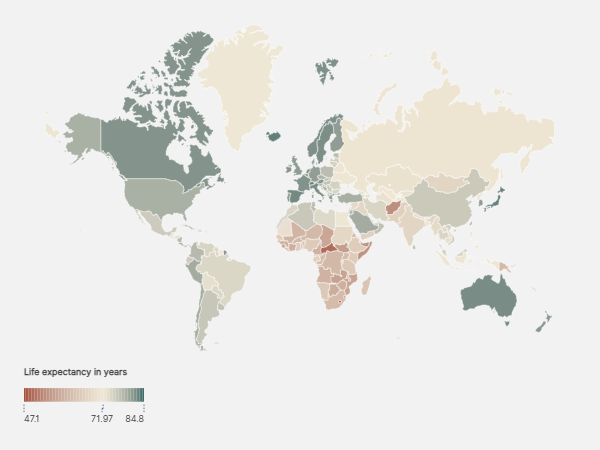 Bubble map A bubble map is a map of dots in which the size of the circles encodes a quantitative variable.
 Cartogram A cartogram is a map in which the size and shape of the different regions are distorted to depict the values of a quantitative variable.
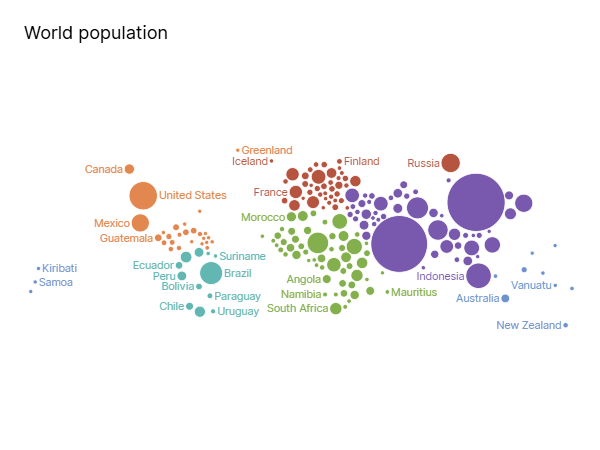
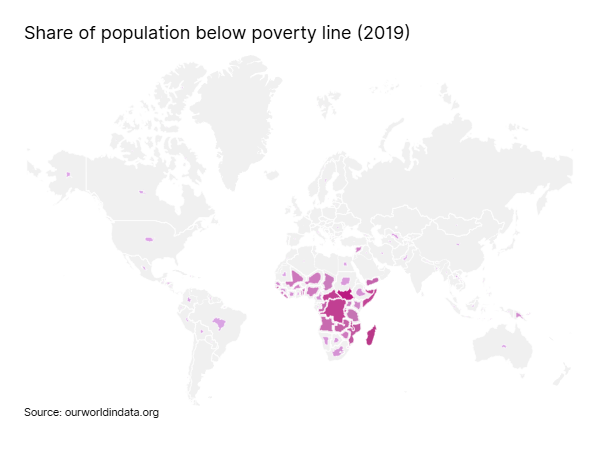 Dorling cartogram A Dorling cartogram is a data map that displays countries or regions as circles (or boxes) whose surface area corresponds to the value of the quantitative variable.
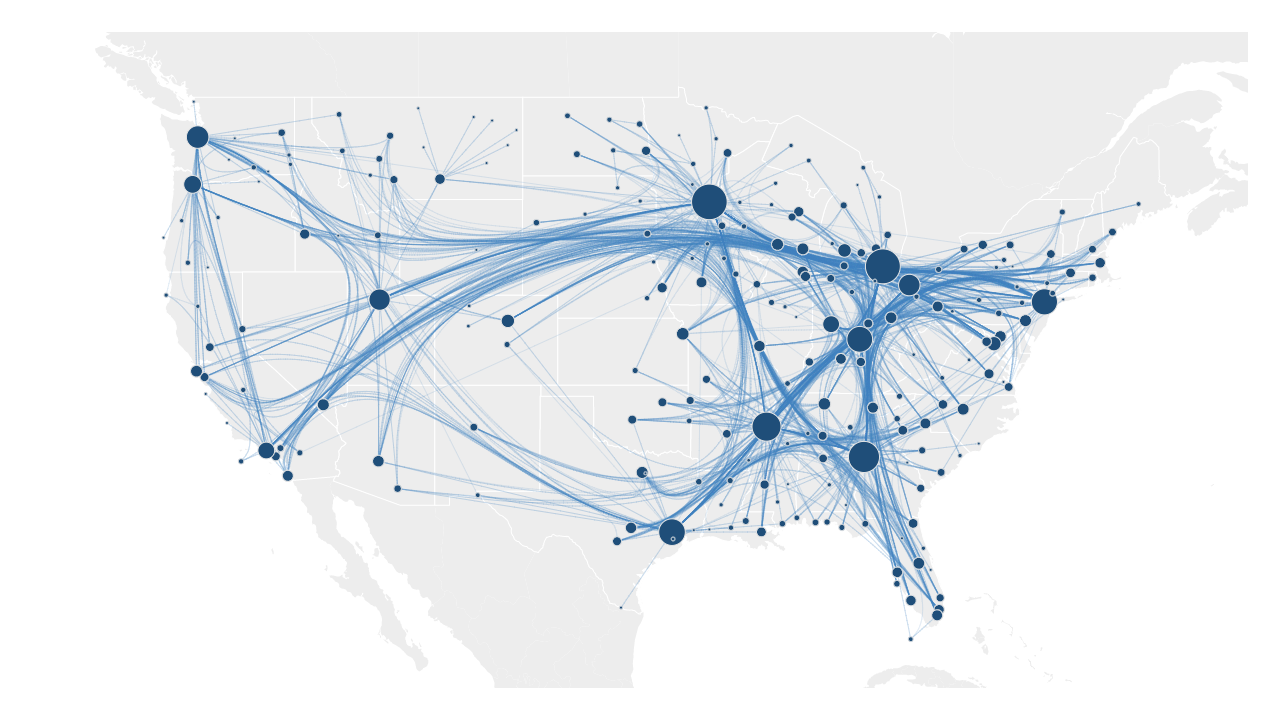
 Connection map A connection map is a graph or node-link diagram, in which the position of the nodes is geospatial.
Choropleth map A choropleth map is one in which the color of the different regions encodes a quantitative variable. Bubble map A bubble map is a map of dots in which the size of the circles encodes a quantitative variable. Cartogram A cartogram is a map in which the size and shape of the different regions are distorted to depict the values of a quantitative variable. Dorling cartogram A Dorling cartogram is a data map that displays countries or regions as circles (or boxes) whose surface area corresponds to the value of the quantitative variable. Connection map A connection map is a graph or node-link diagram, in which the position of the nodes is geospatial. Network
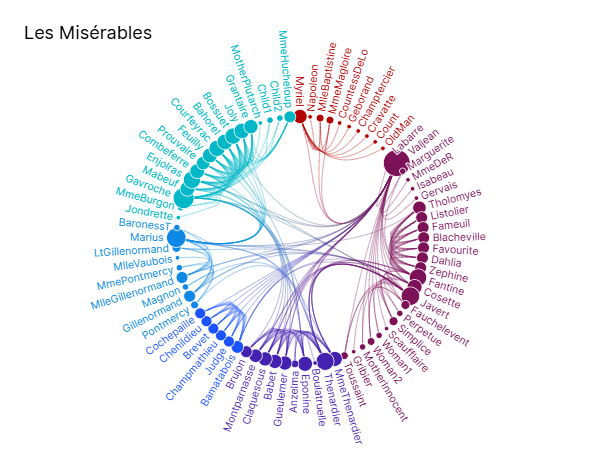
Network diagram Network diagrams are visualizations that depict the relationships (links) between a set of nodes. 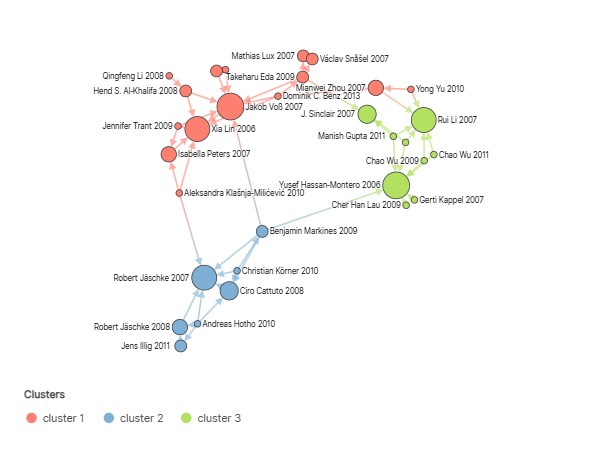 Circular graph Circular graphs are a type of network diagram in which the nodes are visually arranged in a circular layout.
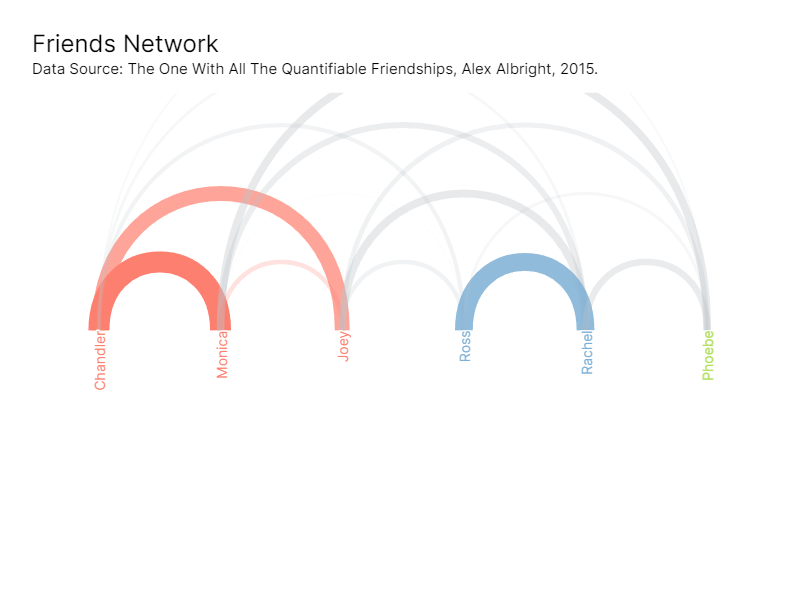
 Arc diagram An arc diagram is a type of network graph in which nodes are visually arranged in a linear layout, and links between nodes are represented by arcs (curved lines).
 Time-based network diagram Time-based network diagrams are a special kind of network diagram , in which a date variable is represented either through the position of nodes, or through other visual attributes.
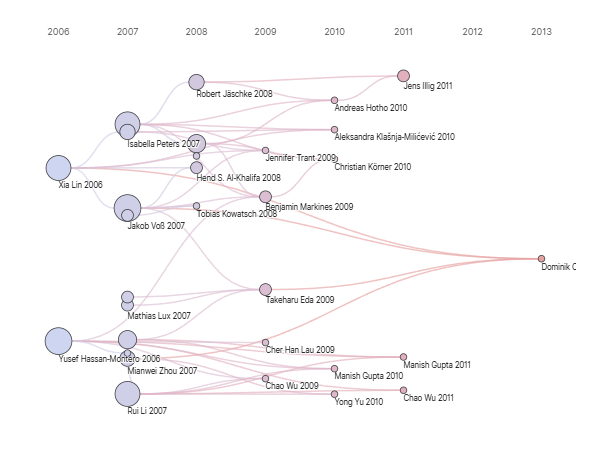
Circular graph Circular graphs are a type of network diagram in which the nodes are visually arranged in a circular layout. Arc diagram An arc diagram is a type of network graph in which nodes are visually arranged in a linear layout, and links between nodes are represented by arcs (curved lines). Time-based network diagram Time-based network diagrams are a special kind of network diagram , in which a date variable is represented either through the position of nodes, or through other visual attributes.